


Inner Ear Pain When Sleeping on Side | Causes & Solutions
Severe inner ear pain when sleeping on side is one of the most common complaints side sleepers report — and one of the most fixable. The pain isn't random. Your pillow is placing sustained pressure on cartilage that has no cushioning, no padding, and nowhere to go for 7 hours. Fix the pressure source, and the pain stops.

Table of Contents
What Causes Severe Inner Ear Pain When Sleeping on Side
The main cause is sustained pressure. When you sleep on your side, your ear sits directly against the pillow bearing the full weight of your head. Over 6 to 8 hours, this constant compression reduces blood flow to the ear cartilage and triggers inflammation. Chondrodermatitis nodularis helicis[1] — a condition caused specifically by chronic pressure on the ear from side sleeping — confirms this mechanism. The predominant symptom is localized pain exactly where the ear contacts the pillow.
Head position intensifies the problem. When your neck is twisted or your head sits at an incorrect angle, ear pressure concentrates instead of spreading across the pillow surface. Cleveland Clinic research on perichondritis[2] shows that cartilage tissue loses adequate blood flow quickly under prolonged compression. Inflammation can develop within hours and persist well into the next day.
The jaw adds a third variable. Studies on temporomandibular joint disorders[3] show that TMJ dysfunction causes referred pain to the ear through the auriculotemporal nerve. If you clench your jaw during sleep, that tension radiates directly to your ear — making ear pain from side sleeping feel sharper than the pressure alone would cause.
An inadequate pillow amplifies all three factors. A flat or collapsing pillow lets your head sink unevenly, concentrating pressure exactly on the ear instead of distributing head weight across your neck and shoulder. Correct side sleeping pillow positions matter as much as the pillow material itself.
How to Sleep on Your Side Without Ear Pain
Severe inner ear pain when sleeping on side is almost always a pillow problem. A properly designed pillow distributes head weight across a wider surface area — so your ear never bears the full load. A poor pillow creates the opposite: a pressure sinkhole where your ear is trapped for hours.
High-density memory foam is the most effective fill for side sleepers with ear pain. It conforms to the shape of your head without collapsing under it. Unlike down pillows — which compress into a dense clump under head weight — or flat pillows that offer no resistance, quality memory foam stays firm and responsive throughout the night. For a direct comparison of fill types, see the guide on latex vs. memory foam for side sleepers.
Pillow height for side sleepers is equally critical. Too high and your neck torques sideways — sending tension straight to the ear. Too low and your ear sinks into the mattress. The correct height keeps your head level with your spine, with your ear floating above the pillow surface rather than pressing into it.
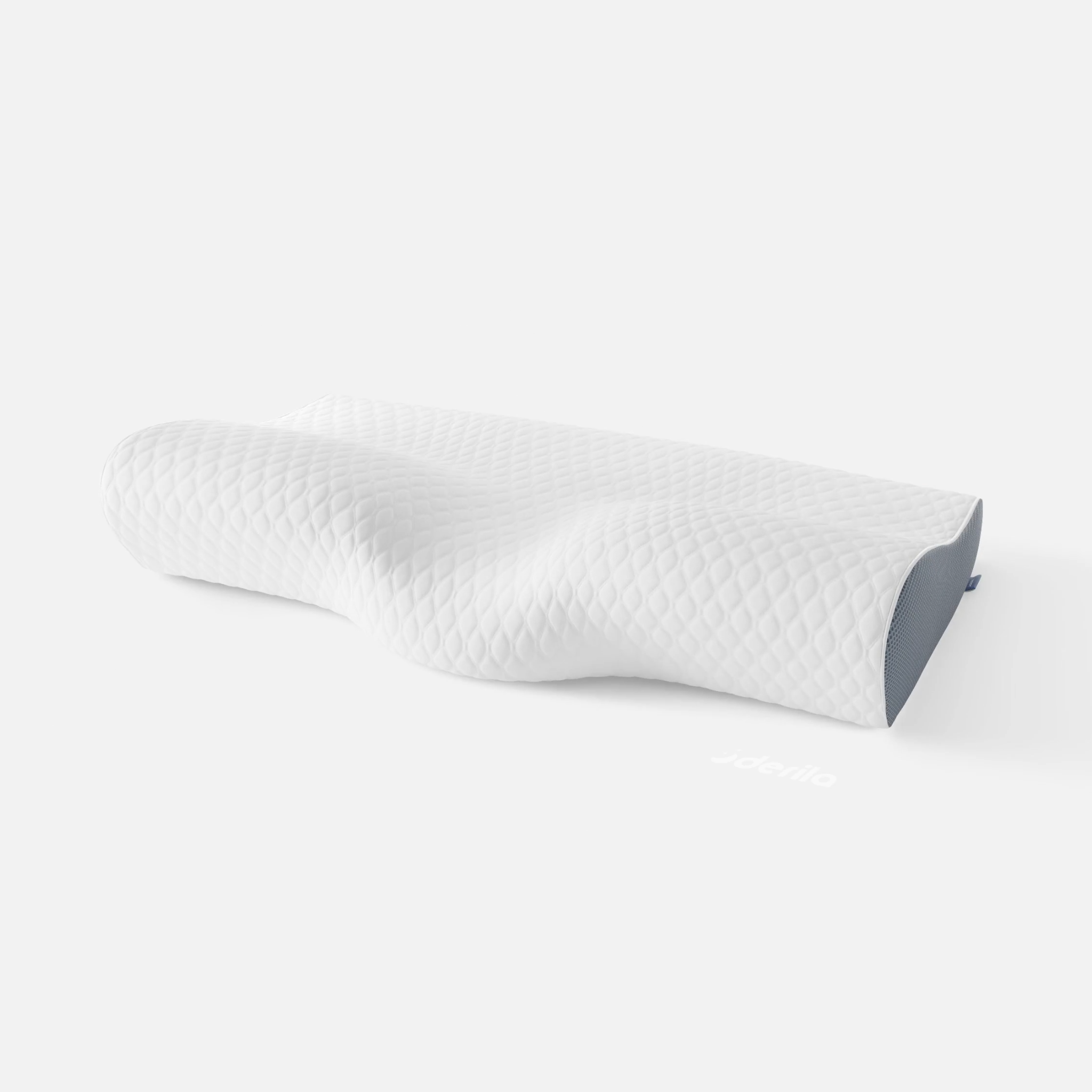
The Derila side sleeper pillow is built specifically for ear pain when sleeping on side. Its butterfly-shaped ergonomic design cradles your head and neck while elevating the ear zone away from direct mattress contact. The high-density memory foam maintains firmness all night and prevents the collapse that concentrates pressure.
Give any new pillow at least 2 to 3 weeks. Full relief — where inflammation subsides and neck muscles reset into proper alignment — takes that long to settle in. Most people notice a meaningful improvement within the first week.
Relief Strategies for Ear Pain When Sleeping on Side
While your pillow adjustment takes effect, these strategies reduce ear pain from side sleeping in the short term:
- Heat therapy: A warm compress on your neck and jaw for 5 to 10 minutes before bed relaxes muscles and improves blood flow to the ear.
- Cold therapy: If your ear is actively inflamed — swollen, hot to the touch — cold reduces acute inflammation more effectively than heat. Alternate based on symptoms.
- Jaw and neck stretching: Gently open and close your mouth, roll your shoulders, and stretch your neck in each direction before bed. TMJ tension and neck tension both contribute to inner ear pain when sleeping on side.
- Position rotation: If one ear is consistently painful, alternate sides every other night. You lose no benefit from side sleeping by switching which side.
- Leg elevation: When you elevate your legs while sleeping on your side, you reduce pelvic tilt, straighten your spine, and indirectly decrease the pressure your ear is carrying. Fix alignment from the hips up and the ear pressure reduces automatically.
Pillow firmness also plays a role. A pillow that's too soft or too firm collapses unevenly under your head — recreating the concentrated pressure conditions that inflame ear cartilage. Side preference matters too: sleeping on your left side offers specific health benefits worth knowing about if you're rotating to give the right ear a break.
When to See a Doctor About Ear Pain
Two to three weeks of consistent pillow improvement, stretching, and heat therapy resolves most cases of severe inner ear pain when sleeping on side. If you're still in pain after that period — or if any of the following are present — see a healthcare professional:
- Pain that worsens despite conservative measures
- Discharge or drainage from the ear
- Hearing loss or muffled hearing
- Fever alongside ear pain
- Dizziness or balance problems
- Jaw pain or difficulty opening your mouth fully
Research on otalgia[4] shows that up to 50% of ear pain cases involve referred pain from other structures — including the cervical spine, TMJ, and throat. These underlying causes won't improve with a pillow change alone. They require direct diagnosis and treatment of the source.
Frequently Asked Questions
How long does it take for ear pain to improve with a new pillow?
Most people notice improvement within 3 to 7 nights as their head and neck adjust to proper support. Full relief from severe inner ear pain when sleeping on side typically takes 2 to 3 weeks as inflammation fully subsides. Commit to at least two weeks before evaluating whether the pillow is working.
Is my pillow definitely causing my ear pain?
Probably, but not certainly. Ear pain when sleeping on side is most commonly caused by sustained pressure and neck misalignment, but earwax buildup, active infection, TMJ dysfunction, and congestion can all cause or worsen symptoms. A two-week pillow trial is the fastest way to determine whether pressure is the culprit.
Why is memory foam better than standard pillows for ear pain?
Memory foam conforms to your head shape while staying firm — it won't compress into a sinkhole like down pillows, and it provides consistent support unlike flat pillows. It actively elevates your ear throughout the night rather than letting it sink into sustained pressure buildup.
Can I fix this by switching to back sleeping?
Back sleeping removes all ear pressure, so it would eliminate pain entirely. But most people naturally return to their preferred position regardless of intention. If you strongly prefer side sleeping, investing in proper pillow support is the practical long-term solution — not trying to change an ingrained sleep position.
Should I see a doctor immediately for severe ear pain?
Not immediately for mild to moderate pain without other symptoms. Try a better pillow, heat therapy, and position rotation for 2 to 3 weeks first. If pain is severe, worsening, or accompanied by discharge, hearing changes, fever, or dizziness, see a healthcare professional promptly rather than waiting.
Are heat and cold therapy permanent fixes for ear pain when sleeping on side?
No — they relieve symptoms temporarily. Neither heat nor cold addresses the sustained pressure and alignment problem that's actually causing the pain. Use them for short-term relief while you solve the root cause: a pillow that keeps your ear out of sustained contact with the surface.
References
- "Chondrodermatitis Nodularis Helicis." StatPearls. National Library of Medicine, National Institutes of Health. https://www.ncbi.nlm.nih.gov/books/NBK482507/
- Cleveland Clinic. "Perichondritis." https://my.clevelandclinic.org/health/diseases/23222-perichondritis
- "Association between Ear Fullness, Earache, and Temporomandibular Joint Disorders." PMC. National Library of Medicine. https://pmc.ncbi.nlm.nih.gov/articles/PMC4296994/
- "Otalgia." StatPearls. National Library of Medicine, National Institutes of Health. https://www.ncbi.nlm.nih.gov/books/NBK549830/