


Latex vs Memory Foam for Side Sleepers
For latex vs memory foam for side sleepers, the answer isn't the same as it is for back or stomach sleepers. Side sleeping loads your shoulder and neck for 7 hours straight. The material determines how your pillow handles that load at 3am — not just when you first lie down.
The short answer: latex is better for most side sleepers. It maintains its height through the night, recovers fast when you shift positions, and sleeps cooler. Memory foam wins in one specific scenario: if pressure relief for a painful shoulder is your top priority and you don't move much during the night.
The National Council on Aging[1] identifies side sleeping as the most common adult sleep position and notes that pillow support material is one of the most important variables in reducing overnight neck and shoulder pain. Getting the material wrong means getting the support wrong.
Table of Contents
Support and Spinal Alignment for Side Sleepers
Latex has a natural spring to it. Press it down and it pushes back immediately. That responsiveness is what side sleepers need most: your head sinks in slightly, the pillow supports the neck from beneath, and the shape rebounds when you shift to the other side. You don't re-fluff it. It holds its position automatically.
Memory foam conforms around your head. It molds to your shape and cradles the neck, which many people find immediately comfortable. The issue for latex vs memory foam for side sleepers is recovery speed. Memory foam can take several seconds to adjust when you change positions. That delay doesn't break support for everyone, but for frequent movers, the pillow spends part of the night catching up to where your head actually is.
A 2025 review by Dr. Kevin Lees at The Joint Chiropractic on the best pillows for side sleepers[2] found that latex consistently produced better spinal alignment outcomes than memory foam in side sleepers who shift positions during the night. For still sleepers, memory foam's contouring was comparable.
Sleep Foundation's research on neck pain and pillow support[3] highlights that consistent height maintenance through the night matters more than initial contouring for people with existing neck pain. Latex holds its height; memory foam gradually compresses.
Pressure Relief: Shoulder and Ear Pain
Side sleeping creates two main pressure zones: the shoulder and the ear. Your pillow handles both. A pillow that's too firm concentrates pressure at those points; one that's too soft lets the spine curve under the weight of your upper body.
Memory foam leads on pressure relief. It distributes pressure by conforming around the shoulder, spreading load across a wider contact area. Side sleepers who wake with a numb arm, a sore shoulder, or severe inner ear pain when sleeping on side often find faster relief with memory foam than with latex.
Latex provides solid pressure relief too — just less deep contouring. The trade-off is predictable: latex feels somewhat firmer initially but won't create the "sinking" feeling that can trap a shoulder under sustained compression. It also recovers faster between position changes, redistributing pressure as you move.
A landmark randomised controlled trial in the Lancet[4] found that medium-firm support surfaces significantly outperformed firm ones in reducing pain during sleep. For memory foam vs latex for side sleepers, both materials should land in the medium-firm zone — collapsing-soft and unyielding-firm are both wrong for this position.
Temperature and Durability
Memory foam traps heat. Solid memory foam in particular creates a warm pocket around your head and neck throughout the night. Side sleepers who already run warm will notice this. Shredded memory foam is significantly cooler because the air gaps between pieces allow airflow — but solid foam is the more common construction.
Latex sleeps cooler by nature. Its open-cell structure allows more airflow than traditional memory foam, and natural latex resists heat buildup noticeably better than synthetic alternatives. If you tend to overheat, a breathable cooling pillowcase reduces heat retention from any material — but starting with latex means you're already ahead before the cover adds anything.
On durability, the gap is even larger. A high-quality latex pillow holds its shape and loft for five to eight years. Memory foam begins to soften and lose loft after two to three years of regular use. As memory foam compresses and stops fully recovering, it stops providing the height your neck needs — and the degradation is gradual enough that most people don't notice until they're already waking up stiff every morning.
The higher upfront cost of latex narrows considerably once replacement frequency is factored in. Natural latex also resists dust mites and mold better than memory foam, which matters for allergy-prone sleepers.
Which Is Better: Latex or Memory Foam for Side Sleepers?
For most side sleepers, latex is the better choice. It maintains consistent loft through the night, recovers immediately when you shift positions, sleeps cooler, and lasts significantly longer. Memory foam is the better choice for one profile specifically: a side sleeper with significant shoulder sensitivity who sleeps mostly still in one position.
Loft is the variable both materials share — and it matters more than the material itself. Side sleepers typically need 4 to 6 inches of height to keep the neck level with the spine. A latex or memory foam pillow at the wrong loft produces neck pain regardless of its other qualities. For how to find the right pillow height for your shoulder width, the principles apply equally to both materials.
On safety: memory foam off-gassing is a real but short-lived concern. Sleep Foundation's review of memory foam safety[5] confirms that CertiPUR-US certified foams dissipate within 24 to 48 hours of unpacking. Natural latex has no off-gassing concern. ChiroUp's pillow guide for chiropractors[6] recommends prioritizing certifications when selecting materials — CertiPUR-US for foam, GOLS for organic latex.
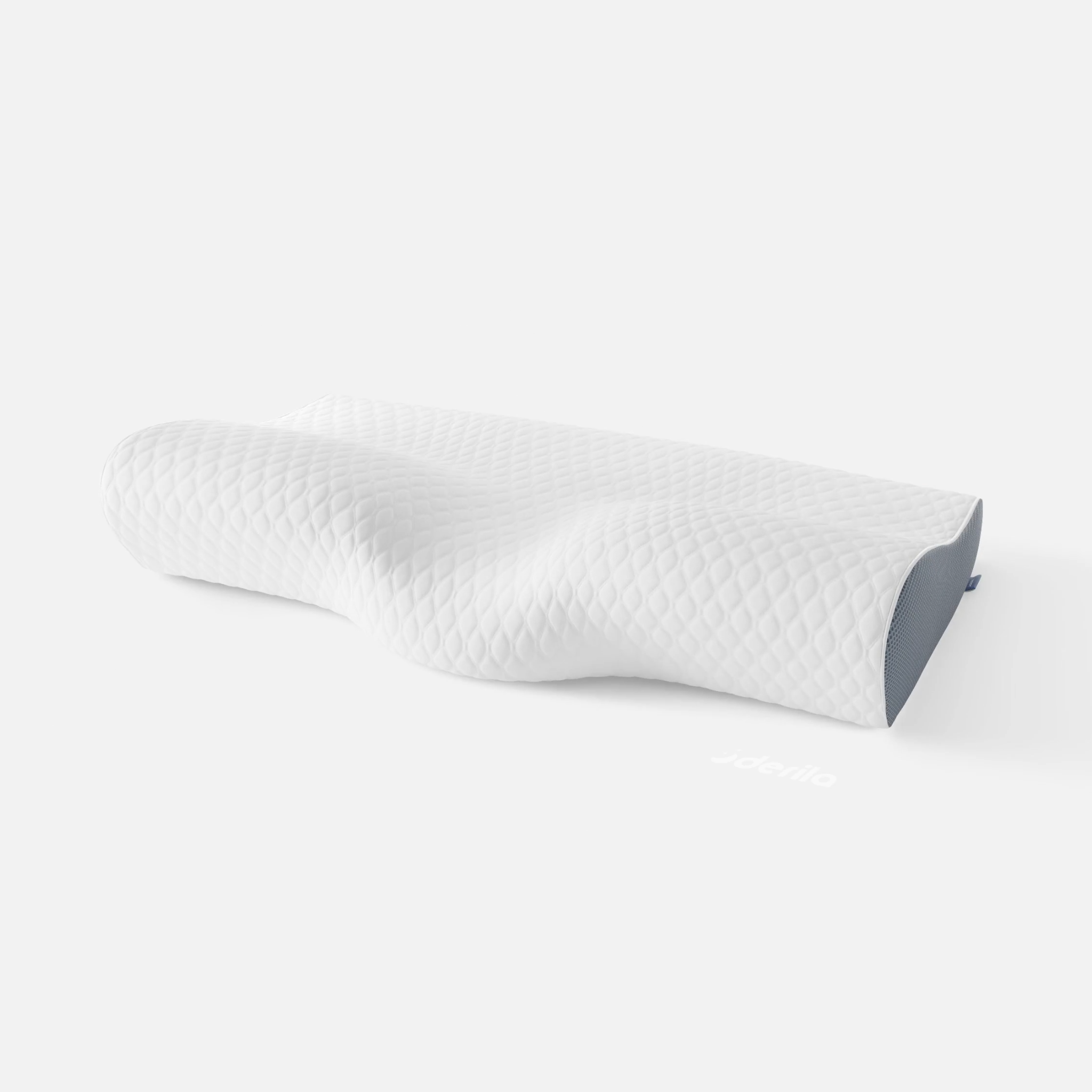
The Derila side sleeper pillow uses a certified high-density memory foam designed to maintain its loft at the correct height for side sleepers throughout the night. It's engineered to address the primary weakness of standard memory foam: compression over time. Explore the full Derila collection to compare options for your sleep profile.
Frequently Asked Questions
Is latex or memory foam better for side sleepers?
Latex is better for most side sleepers because it maintains its loft through the night, recovers quickly between position changes, and sleeps cooler. Memory foam is the better option if pressure relief for a painful shoulder is your primary concern and you tend to sleep in one position. Sleep Foundation's picks for side sleeper pillows[7] note that both materials work when matched to the correct loft for your shoulder width.
Is latex firmer than memory foam?
Latex has a firmer, more responsive feel than most memory foam because it resists compression and pushes back immediately. Memory foam conforms and cradles without pushing back. Side sleepers often perceive latex as firmer initially, but the key variable for neck alignment is loft, not firmness rating — the right height in either material produces comparable support results.
Does memory foam make you sweat at night?
Solid memory foam retains more heat than latex, and some side sleepers find it warmer through the night. Shredded memory foam is significantly cooler than solid foam. Pairing any pillow with a cooling pillowcase reduces heat buildup further. If you already sleep warm, starting with latex or shredded-fill memory foam gives you the cooler baseline before any additional help.
How long does a latex pillow last compared to memory foam?
A high-quality latex pillow typically lasts five to eight years. Memory foam pillows generally begin to soften and lose their loft after two to three years of regular use. As the foam compresses and stops recovering fully, neck alignment suffers — often gradually enough that you don't notice until stiffness has become routine. The higher upfront cost of latex usually pays for itself by the second replacement cycle.
Can the wrong pillow material cause neck pain?
Yes — if it fails to maintain the loft your shoulder width requires through the night. A material that compresses too easily under head weight lets your neck tilt toward the mattress. Held in that position for six to eight hours, the muscles along the side and back of the neck accumulate tension. Choosing between latex vs memory foam for side sleepers matters, but picking the correct loft for your build matters more. See the guide on pillow height for side sleepers for how to measure your correct height.
References
- "Best Pillow for Side Sleepers." National Council on Aging. ncoa.org
- Lees, Kevin. "Best Pillows for Side Sleepers 2025." The Joint Chiropractic, Aug. 6, 2025. thejoint.com
- "Best Pillow for Neck Pain." Sleep Foundation. sleepfoundation.org
- Kovacs FM, et al. "Effect of Firmness of Mattress on Chronic Non-Specific Low-Back Pain." Lancet 362, no. 9396 (2003): 1599–1604. pubmed.ncbi.nlm.nih.gov/14630439/
- "Is Memory Foam Toxic?" Sleep Foundation. sleepfoundation.org
- "Choosing the Best Pillows: 7 Tips Every Chiropractor Should Know." ChiroUp. chiroup.com
- "Best Pillow for Side Sleepers." Sleep Foundation. sleepfoundation.org