


4 Reasons Why Sleeping on Your Left Side Is Better
Sleeping on your left side is better for most people because your organs aren't symmetrical. Your stomach, pancreas, and heart are all positioned in ways that work with left-side gravity rather than against it. Switching from your right side or your back to your left can improve digestion, reduce acid reflux, support your heart, and even help clear metabolic waste from your brain overnight.
Most people pick a sleep position by habit. If you're a right-side or back sleeper, you may be working against your body's anatomy every night without realizing it.
Table of Contents

Why Sleeping on Your Left Side Is Better for Digestion and Acid Reflux
Sleeping on your left side is better for digestion because of how your digestive tract is arranged. Your stomach and pancreas sit naturally to the left of center. Food waste travels from your small intestine through a junction on your right side, then up and across, and finally down through the descending colon on your left. Lying on your left puts gravity with your digestive system during that last stretch — waste moves downward more efficiently, and your stomach empties into the small intestine faster because the gastric outlet sits lower in this position.
The acid reflux benefit comes from the same anatomy. When you lie on your left side, your esophagus sits above your stomach. Acid has to work against gravity to reach it. When you're on your right side, the stomach rises above the esophageal valve, and acid flows upward with minimal resistance.
A 2023 systematic review and meta-analysis published in the World Journal of Clinical Cases[1] found that left lateral sleeping was associated with significantly shorter acid exposure time and faster acid clearance compared to right-side and back sleeping. Researchers at Amsterdam UMC confirmed[2] that right-side sleeping triggers noticeably more reflux episodes at night.
If you experience nighttime heartburn or wake up feeling bloated, switching to your left side is one of the simplest, most evidence-based changes you can make. Many people notice better bowel regularity within a few days of making the switch.

Left-Side Sleeping and Heart Health

For most healthy people, sleeping on your left side is safe for the heart — and may support circulation. A 2025 report from the American Heart Association[3] found that current evidence does not show left-side sleeping causes heart problems in healthy individuals. Some people worry because the heart sits slightly left of center, but this concern isn't supported by research for the general population.
Left-side sleeping also supports lymphatic drainage. Your thoracic duct — the main vessel of your lymphatic system — runs along the left side of your body. Sleeping on your left allows lymph fluid, including proteins and metabolic waste, to drain into the thoracic duct more efficiently.
There is one specific exception worth knowing. If you have congestive heart failure, your doctor may advise sleeping on your right side instead. The positional shift affects how the heart functions under that specific condition. For everyone else, left-side sleeping is the heart-healthier default. Check with your doctor if you have a diagnosed cardiac condition.
How Sleeping on Your Left Side Supports Brain Health

Your brain has its own waste clearance system called the glymphatic network. It flushes out metabolic byproducts — including proteins linked to Alzheimer's disease — primarily while you sleep. A landmark 2015 study in the Journal of Neuroscience[4] by Lee, Benveniste, and colleagues at Stony Brook University found that side sleeping supports glymphatic function more efficiently than back or stomach sleeping.
According to the Cleveland Clinic[5], the glymphatic system is significantly more active during sleep than during waking hours — making sleep position an active variable in how well your brain clears waste overnight. Baptist Health neurologists[6] note that side sleeping is associated with better cognitive health outcomes over time compared to back sleeping.
More research is needed to confirm whether left specifically outperforms right for glymphatic clearance, but sleeping on your side — particularly your left side — is already the position most associated with brain health benefits in the available literature.
Why Left-Side Sleeping Is Recommended During Pregnancy

The Mayo Clinic recommends left-side sleeping for pregnant women[7] because it improves circulation to the placenta and reduces pressure on the inferior vena cava — the large vein that carries blood back to the heart. It also keeps the weight of the growing uterus off the liver, which sits on the right side.
The practical result: more blood and nutrients reach the baby, and swelling in the feet and ankles reduces because blood returns to the heart more efficiently. As the uterus grows through the second and third trimesters, right-side and back sleeping can compress important blood vessels — which is why the recommendation becomes more important, not less, as the pregnancy progresses.
For non-pregnant sleepers, the same reasoning applies in a milder form. Sleeping on your left side is better for overall circulation because the inferior vena cava runs along the right side of the spine. Lying on your right compresses it slightly; lying on your left keeps it open. Over a full night, that difference adds up.
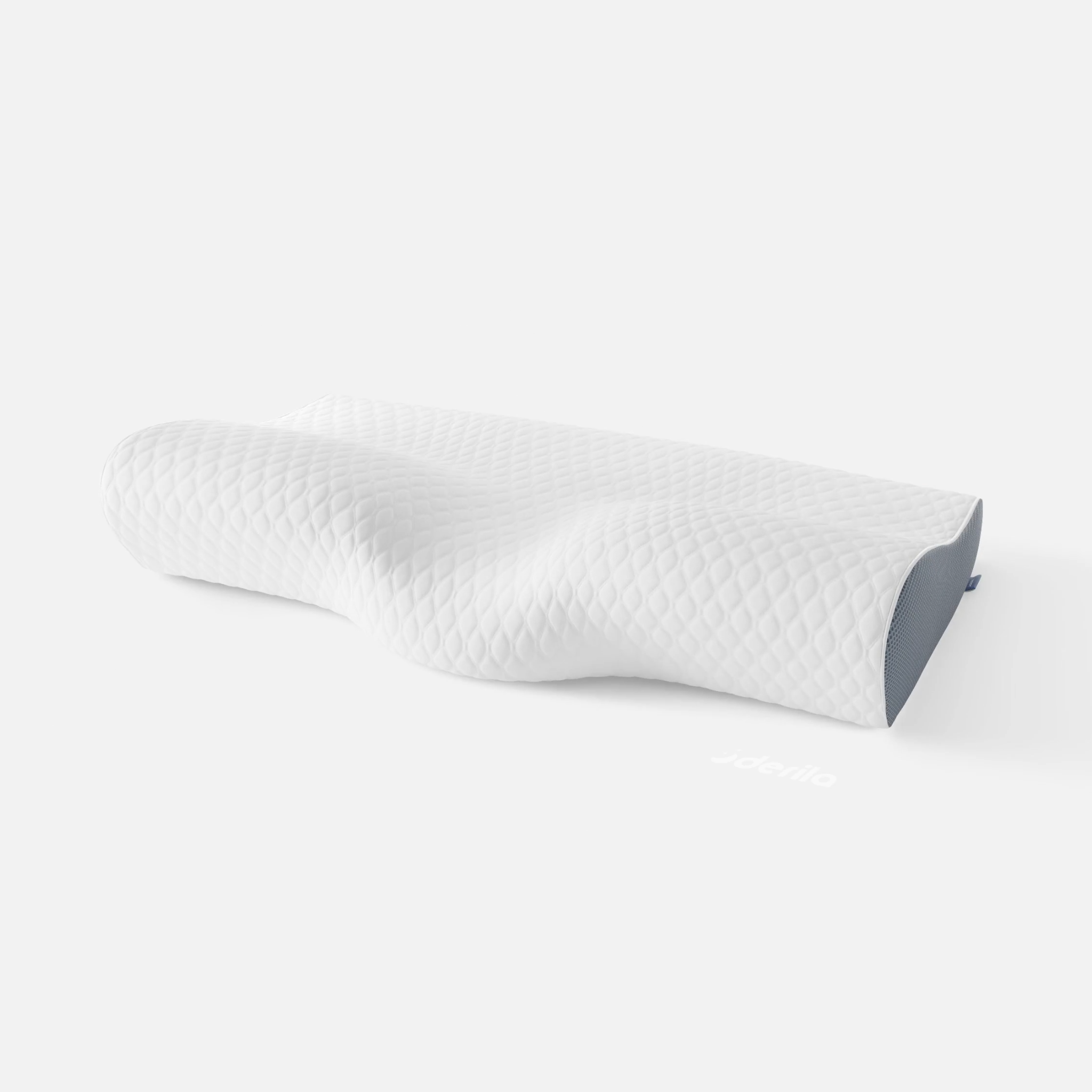
If you're trying to make the switch and stay on your left side through the night, the pillow setup matters. The guide on pillow height for side sleepers covers how to get your head pillow at the right height to keep you comfortable. Tucking a pillow between your knees also reduces hip pressure and helps anchor your position. The Derila side sleeper pillow is built specifically to keep side sleepers properly aligned through the night.
Frequently Asked Questions
Is it bad to sleep on your left side every night?
For most healthy people, sleeping on your left side every night is safe and beneficial. It supports digestion, reduces acid reflux, and aids circulation. The main exception is people with certain heart conditions like congestive heart failure, who may be advised by their doctor to sleep on their right side. Always check with your doctor if you have a specific cardiac diagnosis.
Does sleeping on your left side help with bloating?
Yes. Your stomach and colon are positioned so that left-side sleeping helps gas and waste move downward through your digestive tract more efficiently overnight. Many people who switch to left-side sleeping from their back or right side notice less morning bloating within a few days.
Why does sleeping on your left side reduce acid reflux?
When you lie on your left side, your esophagus sits above your stomach — acid has to work against gravity to reach it. On your right side, the stomach rises above the esophageal valve and acid flows upward easily. A 2023 meta-analysis in the World Journal of Clinical Cases[1] confirmed that left-side sleeping significantly reduces both acid exposure time and the number of reflux episodes during the night.
How do you stay on your left side all night?
The most reliable method is a pillow setup that makes the position comfortable enough that you don't want to move. Your head pillow needs the right height for your shoulder — see the guide on pillow height for side sleepers for how to measure this. Tucking a pillow between your knees reduces hip pressure. Hugging a body pillow anchors you on your left and prevents rolling onto your back. For the right pillow firmness for side sleeping, medium-firm works for most people.
Should you sleep on your left or right side?
For most people, the left side is the better choice. It benefits digestion, reduces acid reflux, improves lymphatic drainage, and is the standard recommendation during pregnancy. The right side has specific drawbacks — the reasons you should avoid sleeping on your right side include increased acid reflux risk and compression of the inferior vena cava. Left-side sleeping is the safer and more beneficial default for healthy adults.
References
- Simadibrata DM, et al. "Left Lateral Decubitus Sleeping Position Is Associated with Improved Gastroesophageal Reflux Disease Symptoms." World Journal of Clinical Cases 11, no. 30 (2023): 7329–7336. pubmed.ncbi.nlm.nih.gov/37969463/
- Amsterdam UMC. "Sleeping on the Left Side Reduces Acid Reflux." amsterdamumc.org
- American Heart Association News. "Can Sleep Position Affect Your Heart and Brain Health?" Jan. 24, 2025. heart.org
- Lee H, Xie L, Yu M, Benveniste H, et al. "The Effect of Body Posture on Brain Glymphatic Transport." Journal of Neuroscience 35, no. 31 (2015): 11034–11044. jneurosci.org
- Cleveland Clinic. "Glymphatic System." my.clevelandclinic.org
- Baptist Health. "Your Sleeping Position May Help Determine Cognitive Health." baptisthealth.net
- Mayo Clinic News Network. "Mayo Clinic Minute: What Is the Best Sleeping Position?" newsnetwork.mayoclinic.org