


How to Elevate Your Legs While Sleeping on Your Side
How to elevate your legs while sleeping on your side requires a different approach than standard leg elevation advice. Most guidance is written for back sleepers — raise both legs 6 to 12 inches above heart level, stack pillows under your heels. That works on your back. As a side sleeper, it doesn't. The moment you prop both legs up, you end up twisted and wide awake.
The fix is a firm pillow or wedge between your knees, not under both legs. This elevates the top leg, keeps your hips level, and still delivers real benefits for swelling, circulation, and back pain — without sacrificing the side sleeping position.
Table of Contents
Why Standard Leg Elevation Doesn't Work for Side Sleepers

True leg elevation — both legs raised above heart level — requires lying on your back. The geometry of that position lets your spine stay neutral while your legs go up. When you try to recreate that as a side sleeper, you either lose the lateral position or you end up with your hips twisted and your lower back strained.
That's the core tension. Side sleeping and full bilateral leg elevation are physically incompatible without significant trade-offs. The pelvis can't stay neutral when both legs are raised in a side position — one hip has to rotate to compensate, and that rotation is where the pain comes from.
The goal shifts slightly for side sleepers: instead of elevating both legs symmetrically above the heart, the focus becomes elevating the top leg to support hip and spine alignment, reduce pressure on joints, and improve local circulation. It's a different kind of elevation, but it produces real results when done correctly. Your overall pillow position as a side sleeper matters as much as the tool you use for leg support.
Why Side Sleepers Should Still Elevate Their Legs
Even partial elevation of the top leg — as side sleepers typically achieve — produces meaningful relief for swelling, back pain, varicose veins, and pregnancy discomfort. The mechanism is straightforward: gravity moves excess fluid away from the ankles and calves when the leg is raised, reducing overnight pooling.
Sleep Foundation guidance on side sleeping with knee support notes that keeping the top leg elevated maintains natural hip and pelvic alignment and reduces lower back strain simultaneously. The two benefits reinforce each other — a supported top leg keeps hips level, which lets the lumbar muscles relax instead of working all night to hold the position.
The most common conditions that bring people to leg elevation include: leg swelling and edema, varicose veins, chronic lower back pain, hip bursitis, and late-stage pregnancy. In each case, side sleepers can achieve partial relief through proper top-leg support, with more significant edema cases sometimes requiring brief periods of full elevation on the back in addition to the main sleep position. Sleeping on your left side amplifies the circulation benefit further, since left-side sleeping also avoids compressing the inferior vena cava.
How to Elevate Your Legs While Sleeping on Your Side

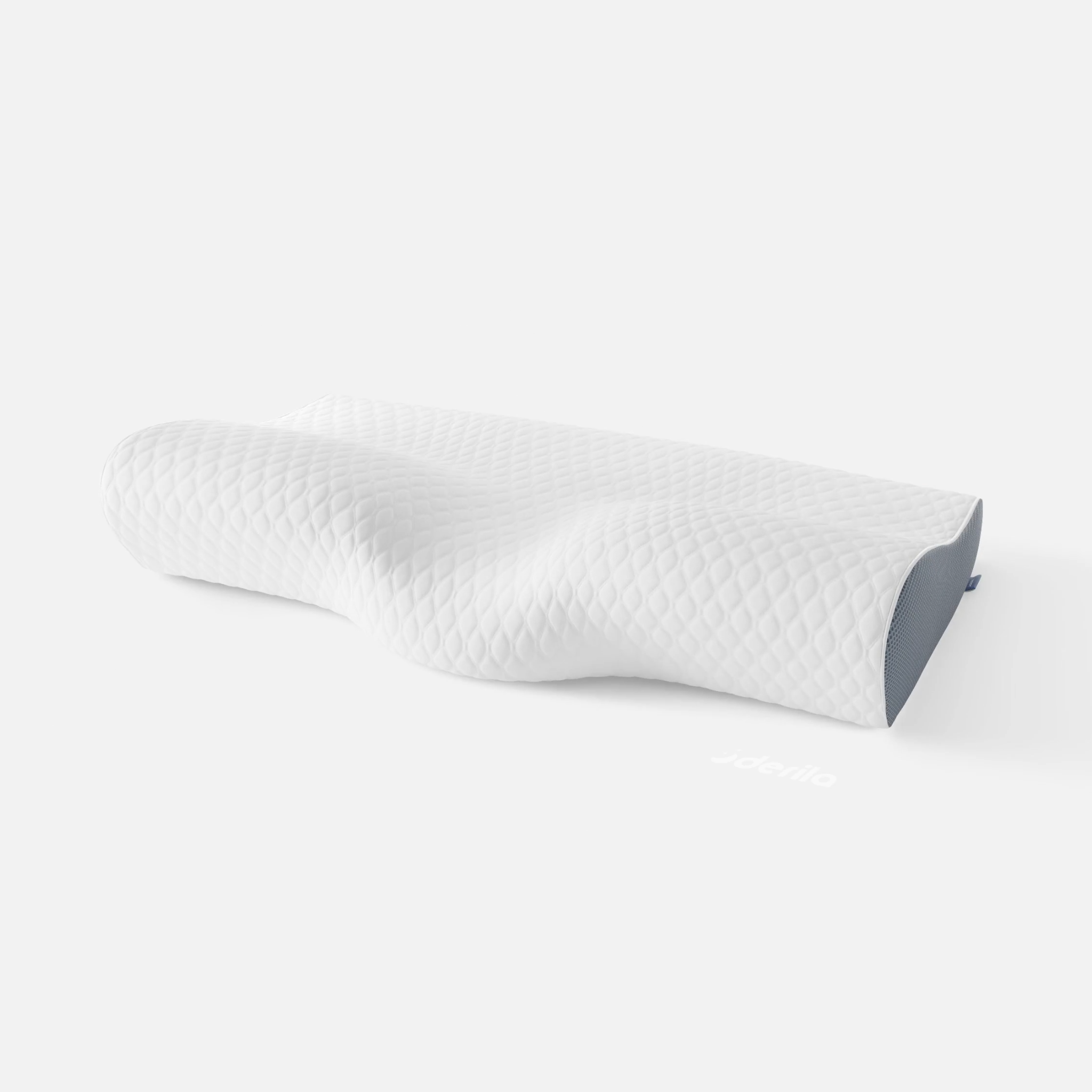
The most effective method for elevating your legs while sleeping on your side is placing a firm pillow or wedge between your knees, with the top leg resting on it. This elevates the top knee and hip slightly, reduces hip rotation, and keeps the spine aligned. Three tools work well:
- Firm pillow between the knees. The most accessible starting point. A regular pillow works, but a firm, contoured knee pillow holds its shape better through the night. Position it so the top knee sits roughly level with the hip — not higher.
- Wedge pillow between the thighs and calves. Provides graduated support along the full leg, not just at the knee. Better for calf swelling or varicose veins along the lower leg.
- Bolster or rolled blanket. Works in a pinch, but softer materials compress through the night and lose height. Use as a temporary solution, not a long-term one.
Key principle across all three: support from the knee to the ankle. A pillow that only catches the knee leaves the lower leg dangling, which creates its own pressure point by morning.
Pillow between knees vs. under legs — they serve different goals. Between the knees is about alignment: it stops the top leg from dropping forward and twisting the hips. Under the legs is about circulation: it elevates the limbs to encourage fluid drainage. For back pain, use between-knees. For edema and swelling, a full-leg wedge between thighs and calves is more effective — though full bilateral elevation (6–12 inches above heart) still requires brief periods on your back for significant swelling. Understanding your pillow height needs for the head applies to leg support too: the right height for your body avoids overcorrection.
Target height for the top leg: 4–6 inches. That's enough to reduce hip joint pressure, prevent leg drop, and provide modest circulation support. A slight knee bend (20–30 degrees) makes this more sustainable than a fully straight leg, which creates hamstring tension and heel pressure over a full night.
Mistakes That Cause Hip and Back Pain
The most common mistake is using a soft pillow that compresses through the night. As it flattens, the top leg gradually drops, the hip rotates forward, and the lower spine gets pulled out of alignment. You wake up with the exact back pain the elevation was supposed to prevent. A firm, structured pillow or wedge that holds its shape is not optional — it's the whole mechanism. The right firmness for your body weight matters here just as it does for your head pillow.
The second mistake is propping both legs behind your body on a wedge while staying in the side position. When the legs are elevated behind you and you're lying on your side, your hips rotate inward or outward to compensate. Research on side sleeper hip alignment confirms that when legs fall outward or shift during elevation, the hips rotate with them — creating the spinal strain you were trying to avoid. The elevated support belongs between the legs, not behind them.
A third mistake is expecting full bilateral elevation to work in side sleeping at all. If your swelling is significant enough to require both legs raised 10–12 inches above heart level, accept that you'll need to spend some time on your back for that phase and then transition to your side for the rest of the night. Trying to force full elevation into a permanent side sleeping posture usually produces more problems than it solves.
Frequently Asked Questions
Can you elevate your legs while sleeping on your side?
Yes, but not the same way as back sleepers. Side sleepers can effectively elevate the top leg using a firm pillow or wedge between the knees. This provides hip alignment, reduces lower back strain, and delivers modest circulation support. Full bilateral elevation — both legs raised above heart level simultaneously — isn't sustainable in a true side sleeping position and usually causes hip rotation and back pain when attempted.
What is the best method for elevating legs while side sleeping?
A firm, contoured wedge or knee pillow placed between the legs — from knee to ankle — works best. Soft pillows compress under the weight of your leg and lose effectiveness by midnight, causing the hip to rotate and the lower back to strain. A pillow with a structured foam core gives the most consistent support. For calf swelling or varicose veins, a full-leg wedge between the thighs and calves provides more graduated elevation than a knee pillow alone.
How high should your legs be when sleeping on your side?
For the top leg, 4–6 inches of elevation is a realistic and effective target in a side sleeping position. Achieving the full 6–12 inches above heart level recommended for circulation issues requires lying on your back. A slight knee bend (20–30 degrees) makes the side-sleeping elevation more comfortable and sustainable than trying to elevate a fully straight leg overnight.
How do I stop my pillow from falling out from between my knees?
Use a firmer, contoured pillow rather than a standard soft pillow, which slips as you shift during the night. A tapered wedge shape tends to stay in position better than a cylindrical bolster. Wearing tighter sleep clothing or compression socks can also help anchor the pillow. If the pillow consistently migrates, the issue is usually that it's too soft — it's compressing and sliding rather than holding its shape.
Should I elevate my legs on my left or right side?
Left-side sleeping has circulation advantages — it avoids compressing the inferior vena cava and supports lymphatic drainage. Combining left-side sleeping with leg elevation may offer the best overall circulatory benefit. That said, the more important factor is maintaining consistent elevation with proper hip alignment. A pillow built for side sleepers — with enough loft to keep the head and neck aligned — completes the setup so every zone of the body is properly supported overnight.