


Latex vs Memory Foam for Side Sleepers: Which Pillow Material Stops Neck Pain?
TL;DR: Memory foam and latex are both solid pillow materials, but memory foam is the better pick for most side sleepers. Its slow-contour feel cradles the gap between your shoulder and neck, keeping your spine aligned all night. Latex sleeps cooler and lasts longer, but its bouncy pushback doesn't hug pressure points the same way. Here's what the research and the experts actually say.
If you sleep on your side, you already know the struggle. You wake up with a stiff neck, a sore shoulder, or that annoying pins-and-needles feeling in your arm. Most of the time, the problem isn't your mattress. It's your pillow.
Side sleepers make up the largest group of sleepers, according to the National Council on Aging. Yet most pillow comparisons treat every sleep position the same. They'll tell you latex is bouncy and memory foam is soft, then leave you to figure out the rest.
That's not helpful when you're the one waking up in pain.
This guide breaks down latex vs memory foam pillows specifically for side sleepers. We'll cover support, pressure relief, temperature, durability, safety, and the one measurement most people overlook: pillow loft. By the end, you'll know exactly which material fits your sleep style.
What Is the Difference Between Latex and Memory Foam Pillows?
Latex and memory foam are both foam-based pillow materials, but they feel completely different under your head. Memory foam softens with your body heat and slowly molds around the shape of your head and neck. Latex pushes back right away with a springy, responsive feel that doesn't let you sink in as deeply.
Memory foam is a polyurethane foam originally developed for cushioning. When you press into it, the foam compresses and holds your shape for a moment before slowly returning. That's the "slow sink" feeling people either love or hate.
Latex comes from rubber tree sap (natural latex) or is made synthetically. It feels firmer and bouncier. Press into it and it springs back almost instantly. You get cushioning, but you stay more "on top" of the pillow rather than sinking into it.
The practical difference? Memory foam conforms closely to every curve. Latex supports you with a more even, lifted feel. For side sleepers, that distinction matters more than most people realize.
Why Does Pillow Material Matter for Side Sleepers?
Side sleeping creates a gap between your head and the mattress that's wider than any other position. Your pillow needs to fill that space completely, or your neck bends sideways all night. The wrong material makes this problem worse, not better.
Here's the issue most pillow guides skip over: when you lie on your side, your shoulder pushes into the mattress and creates a gap that runs from your ear down to the bed. Sleep experts call this the "shoulder gap." According to The Joint Chiropractic, your pillow should fill this space so your head stays level with your spine.
If the pillow is too thin, your head tilts downward. Too thick, and it pushes your head up at an angle. Either way, you get neck strain.
This is where material choice comes in. Memory foam adapts to the exact shape of your shoulder gap because it responds to heat and pressure. Latex provides cushioning too, but its bouncier nature means it pushes back against your head rather than wrapping around it. For side sleepers who need precise contouring around the neck and shoulder, an ergonomic neck support pillow built with memory foam tends to do a better job.
Which Pillow Offers Better Pressure Relief for Side Sleepers?
Memory foam delivers stronger pressure relief for side sleepers because it distributes weight across a larger surface area instead of pressing back against specific points. This makes it especially good at reducing soreness around the ear, jaw, and shoulder where side sleepers carry the most contact pressure.
A research review cited by the Sleep Foundation found moderate evidence that contoured pillows can improve spinal alignment and reduce sleep-related neck pain. Memory foam's ability to mold around your head and neck is what makes this contouring possible.
Latex provides pressure relief too, but it works differently. Because latex bounces back quickly, it supports your head by pushing upward rather than by conforming downward. Think of it like resting your head on a firm spring vs. sinking into a custom mold. Both can feel comfortable, but the mold removes more pressure points.
The clinical research backs this up. A landmark study published in The Lancet by Kovacs et al. found that medium-firm support significantly reduced pain and disability compared to firm support. Memory foam naturally falls into that medium-firm sweet spot because it softens under body heat while still providing structure underneath.
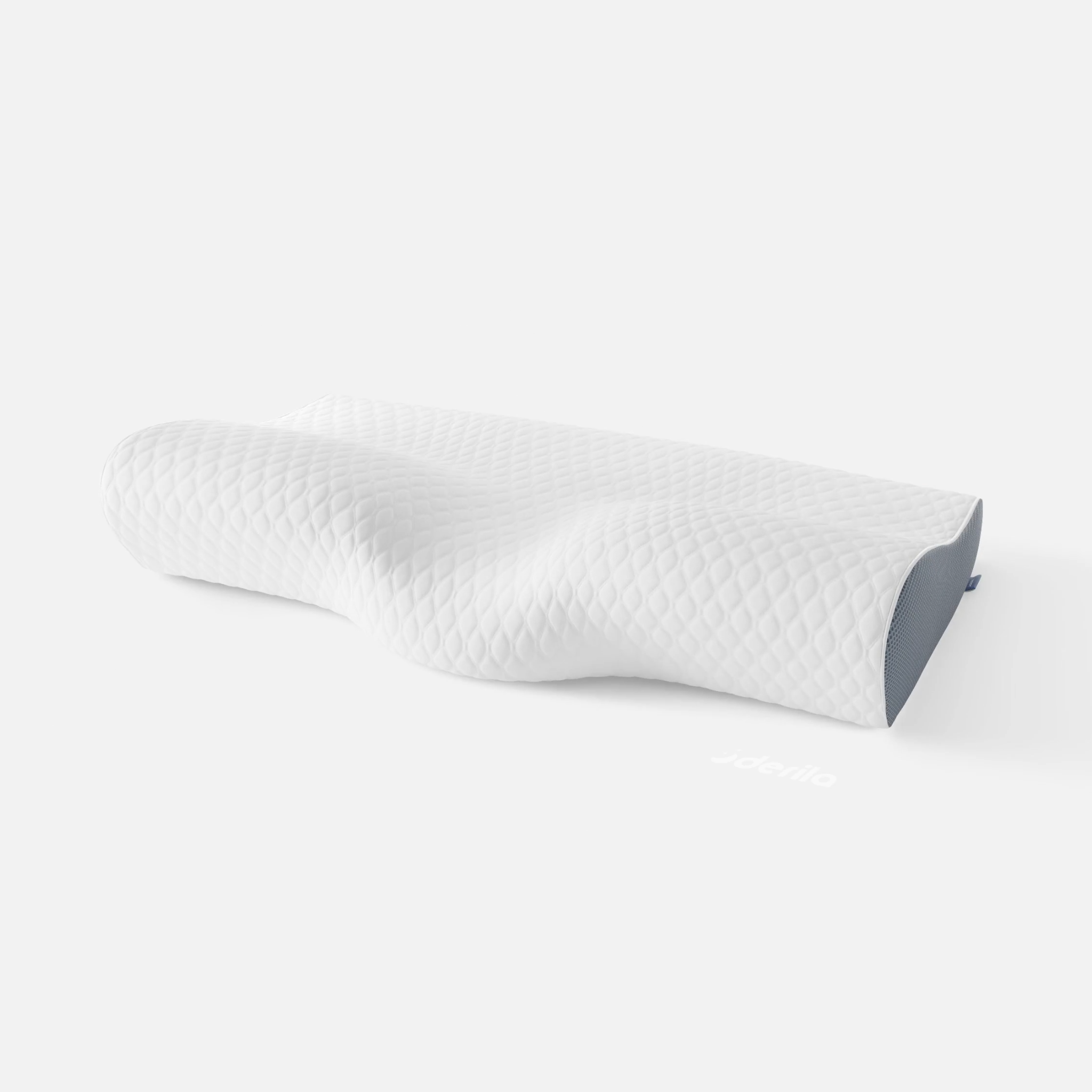
For side sleepers who deal with shoulder pain or wake up with numbness, memory foam's deep contouring gives the edge. The Derila Side Sleeper Pillow uses high-density memory foam with a butterfly design specifically to cradle the shoulder area while keeping the neck aligned.
How Do Latex and Memory Foam Compare on Temperature?
Latex sleeps cooler than traditional memory foam. Natural latex has an open-cell structure that allows air to circulate through the pillow, while standard memory foam tends to trap body heat because it's denser and less breathable.
This is one area where latex has a real advantage. If you're a hot sleeper and a side sleeper, you might find standard memory foam uncomfortably warm, especially during the summer.
That said, pillow technology has caught up. Many modern memory foam pillows use gel infusions, copper infusions, or ventilated designs to pull heat away from your head. Cooling pillowcases also make a big difference. A breathable cooling pillowcase paired with a memory foam pillow can solve the heat issue without sacrificing the contouring benefits side sleepers need.
The bottom line on temperature: latex wins on natural breathability. But with the right cover or cooling design, memory foam closes the gap.
Durability and Value: Latex vs. Memory Foam
Latex pillows generally last longer than memory foam pillows. A quality natural latex pillow can hold its shape for 5 to 10 years, while most memory foam pillows perform best for about 3 to 5 years before they start to flatten or lose their responsiveness.
On price, memory foam is more accessible. You can find a good memory foam pillow for $30 to $100. Latex pillows typically start around $50 and can run past $150 for natural latex options.
When you look at cost per year of use, the numbers get closer:
-
Memory foam: $50 pillow / 4 years = ~$12.50/year
-
Latex: $100 pillow / 7 years = ~$14.30/year
Both materials offer solid value over time. Memory foam gives you a lower upfront cost with more frequent replacement. Latex costs more initially but lasts longer. For side sleepers, the more important question isn't which lasts longer, it's which one keeps your neck aligned during those years of use.
Are Memory Foam Pillows Safe? Off-Gassing and Certifications Explained
Memory foam pillows are safe for the vast majority of people. The "off-gassing" smell you might notice when unboxing a new memory foam pillow comes from volatile organic compounds (VOCs) released during the manufacturing process. According to the Sleep Foundation, these odors typically fade within a few hours to a few days.
Some people worry about those chemicals. Here's the practical reality: the VOC levels in certified memory foam pillows are well within safety limits. Look for the CertiPUR-US certification, which means the foam was tested and found to have low VOC emissions, no ozone depleters, and no heavy metals.
If the smell bothers you, unbox your pillow in a well-ventilated room and let it air out for 24 to 48 hours before sleeping on it. That's usually enough.
Latex pillows also have certifications to look for. OEKO-TEX and GOLS (Global Organic Latex Standard) certify that natural latex meets safety and environmental standards.
Neither material is dangerous when properly certified. The off-gassing concern around memory foam is real but manageable, and it shouldn't be the reason you pick a less supportive pillow for your sleep position.
How to Pick the Right Pillow Loft as a Side Sleeper?
The right pillow loft, or height, is the single most important factor for side sleeper comfort. Chiropractors recommend a loft of 4 to 6 inches for most side sleepers, which roughly matches the distance from your ear to the outside edge of your shoulder. That's the gap your pillow needs to fill.
Here's how to check if your pillow loft is correct, according to ChiroUp: lie on your side in your normal sleeping position. If your shoulders are perpendicular to the bed and your spine feels level, the height is right. If your top shoulder rolls forward toward the bed, the pillow is too low. If it rolls backward, the pillow is too high.
The Sleep Foundation's lab-tested side sleeper picks consistently recommend medium to high loft pillows with mid-level firmness. This matches what chiropractors advise: you want enough height to fill the shoulder gap, with enough give to let your head settle into a neutral position.
This is another reason memory foam works well for side sleepers. Because it compresses under your head's weight, it self-adjusts to your exact loft needs. A 5-inch memory foam pillow might compress to 4 inches for a lighter person or stay closer to 5 for someone heavier. Latex is less forgiving here because it doesn't compress as much, so getting the exact right loft matters more when you buy it.
Broad-shouldered side sleepers may need a 6-inch or thicker pillow. Petite side sleepers might do better with 4 inches. When in doubt, a slightly thicker pillow that compresses to fit is safer than one that's too thin.
The Verdict: Which Pillow Should Side Sleepers Choose?
Both materials can work for side sleeping. But when you add up the factors that matter most, memory foam comes out ahead for the majority of side sleepers.
Memory foam wins on pressure relief, shoulder contouring, and adaptive loft. It fills the shoulder gap more precisely, reduces contact pressure on the ear and jaw, and self-adjusts to your body's shape. Those are the exact qualities side sleepers need to wake up without pain.
Latex is the better choice if you sleep hot and don't want to deal with cooling accessories, if you prefer a bouncier feel that makes it easy to switch positions, or if you want a pillow that lasts 7+ years without replacing it.
For side sleepers ready to upgrade, the Derila Side Sleeper Pillow combines high-density memory foam with an ergonomic butterfly design built for exactly this sleeping position. Pair it with a breathable cover and you get the contouring support of memory foam without the heat. Browse the full Derila collection to find the right fit for your sleep style.
Frequently Asked Questions
Can side sleepers use latex pillows? Yes. Latex pillows can work for side sleepers, especially if you prefer a firmer, bouncier feel. The key is choosing the right loft height (4 to 6 inches) so your neck stays aligned. Latex won't contour as closely as memory foam, so look for a height that matches your shoulder width.
What pillow height is best for side sleepers? Most chiropractors recommend a pillow loft of 4 to 6 inches for side sleepers. The exact height depends on your shoulder width. Broader shoulders need a taller pillow; petite frames need less height. The goal is keeping your head level with your spine.
Do memory foam pillows cause neck pain? A properly sized memory foam pillow should reduce neck pain, not cause it. Neck pain from a memory foam pillow usually means the loft is too high or too low for your body. Check your alignment: your spine should form a straight line from your lower back through your neck when lying on your side.
How often should side sleepers replace their pillow? Replace a memory foam pillow every 3 to 5 years, or sooner if it stops bouncing back to its original shape. Latex pillows can last 5 to 10 years. A flattened pillow that no longer fills your shoulder gap will lead to neck and shoulder strain regardless of the material.
Is memory foam or latex better for hot sleepers? Latex is naturally more breathable and sleeps cooler than standard memory foam. However, gel-infused memory foam and cooling pillowcases can significantly reduce heat retention. If you're a hot side sleeper, consider pairing a memory foam pillow with a cooling cover for the best of both worlds.